

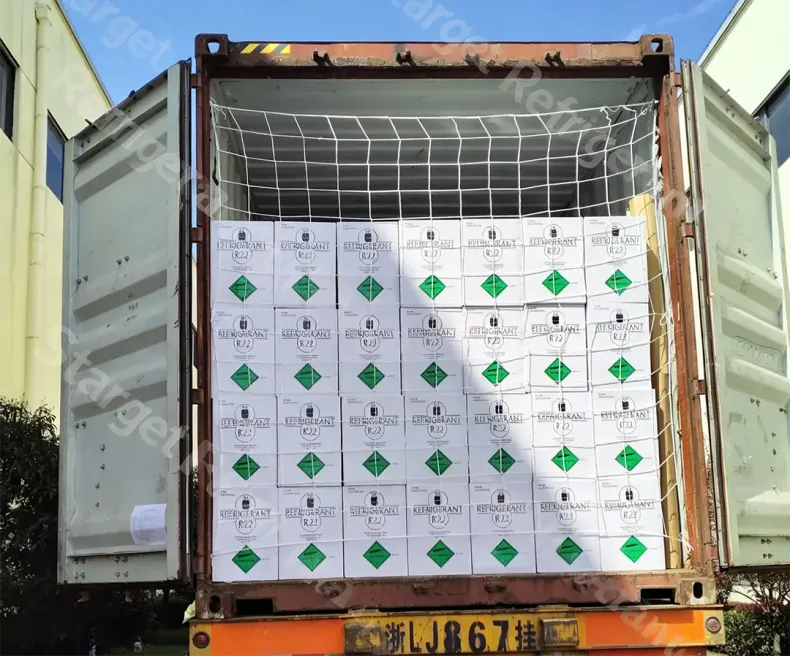
Bulk R22 Refrigerant Wholesale in 2026
The bulk R22 refrigerant wholesale market through 2026 will face unimaginable supply pressures. As production quotas are tightening across major manufacturing countries and importing nations increase HCFC elimination timelines. Wholesalers and bulk purchasers who operate in emerging markets other than Europe, North America, Japan in addition to South Korea, understanding these changing dynamics is crucial.
This article focuses on the present state of the bulk R22 refrigerant wholesale market and examines regional trends in demand, outlines pricing trends, and provides practical advice for businesses who are navigating this period of transition in the refrigerant business.
Contents
R22 Refrigerant Supply Market 2026
The bulk R22 refrigerant wholesale landscape has changed fundamentally in 2026. China is the world’s largest producer of R22 — has cut its production quota for HCFC-22 by 3,005 tons when compared the 2025 level, which brings total domestic production levels at 146,063 tonnes. The 2.02 percentage reduction year-over-year might appear small at first glance, but the effect on supply availability is huge.
Importers who are involved in bulk R22 refrigerant wholesale the production limitations make it clear that the power to negotiate is with the suppliers. China’s R22 exports remained fairly steady at 5,000 metric tons in March 2026, increasing 40% from month to month, indicating the continuing demand for maintenance in the overseas market. But this stability is a mask for the real issue as quotas decrease each year under Montreal Protocol’s speedy HCFC phase-out plan, the window of secure bulk procurement is closing.
Why Bulk R22 Refrigerant Wholesale Prices Are Climbing in 2026
Price fluctuations in the bulk R22 refrigerant wholesale section have proven extremely unpredictable through the first half of 2026. At the end of in April of 2026, R22 price in China have reached CNY 19,500 to 20,500 per metric tonne (approximately $2700-2840 dollars) that is an growth of between 14% and 21 percent. In mid-May price of spot market increased to CNY 22,000 per ton, driven by tightening demand and seasonal supply.
Many converging reasons could be the reason for this pressure to rise:
The cost of raw materials remains higher. The primary feedstocks required for R22 production -chloroform and anhydrous hydrogen fluoride — are at the highest prices until the beginning of 2026, reducing margins and forcing producers to keep pricing firm. Anhydrous hydrogen fluoride benchmark prices reached CNY 15,100 for a ton in the latter part of April 2026, which was about 16% more than the 2025 highest point for the year.。
Control of production proactive is a key feature of producers. Major R22 producers have intentionally restricted output to control the level of inventory and also to help with pricing. Data from the industry show that inventories of manufacturers as well as social inventory remain at an incredibly low level in the Q2 2026 cooling period.
Demand for seasonal products from the market for aftermarket air conditioning. Although new air conditioning equipment does not use R22 however, the huge existing base of older systems — especially in Asia as well as Africa, Middle East, and Africa requires service and recharging. The maintenance demands typically peak in Q2 and Q3, leading to seasonal price spikes.
But analysts say R22 prices in 2026 are probably hitting a ceiling. An industry report puts the 2026 average annual cost at about CNY 19,048 per ton, with profit margins squeezed to CNY 6,804 per ton, an increase of 65% over the prior year. The combination of declining demand for new manufacturing equipment along with the lack of recycled refrigerant in certain markets limit how much prices can rise.
For those who are looking to make bulk R22 refrigerant wholesale contracts, the market requires cautious timing. “R22 hit CNY 20,500 yesterday — the price has been fermenting quickly since the expo,” one Shandong-based trader was quoted by the media of finance in April. “When it was CNY 20,000, clients were still watching; now transactions are happening one after another”.
Where Demand for Bulk R22 Refrigerant Wholesale Remains Strong
Despite the global phaseout plan, Bulk R22 Refrigerant Wholesale flows remain flowing through a variety of important regions. Export data from China’s March 2026 reveal that Middle East, South Asia and Southeast Asia remain the largest destinations for R22 shipping.
Middle East markets have shown a particularly strong demand. Chinese R22 imports into Middle East markets Middle East region grew 29 percent over the course of March 2026. This was largely driven by the policy environment that pushed importers to construct stocks prior to more stringent regulations.
Saudi Arabia has already banned imports of air conditioning and refrigeration equipment that uses R22 as well as other Freon-based refrigerants. Kuwait has followed suit by implementing ministerial Decree No. 19 effective 22nd February 2026 which bans the importation and manufacture equipment for cooling that use R22.
But both nations have enacted provisions for the maintenance of existing equipment19 effective February 22, 2026. Kuwait is one example. Kuwait allows a 10-year transition period to import spare parts from older R22 systems. This has resulted in a continuous aftermarket demand for large quantities of R22 even the new equipment sales move to more efficient refrigerants.
South Asia represents another important demand source. The rapidly growing market for air conditioning, along with the limited refrigerant production capacity, means that India is heavily dependent of Chinese imports. The data from March 2026 showed Indian exports to Chinese fluorinated refrigerants increasing by 42% over the course of a year.
Africa has been in an earlier stage in the phase-out process. South Africa, as an Article 5 country under the Montreal Protocol, reduced its R22 import quota to only 2.5 percent of the originally planned HCFC consumption in January 2026.
As per David Botha, Executive Director of SARACCA the result is just 80-100 tonnes of HCFCs that enter the South African market annually for repairs and maintenance reasons. Other African countries — like Jamaica which has reported dramatically lower R22 imports by 2025, and Eswatini which is aiming for full HCFC removal by 2030follow similar routes.
For bulk R22 refrigerant wholesale suppliers, these regional differences provide distinct opportunities for market growth. Countries with longer phase-out deadlines and larger installed bases of R22 machines, as well as restricted access to refrigerant reclaimed are the most appealing markets for the near future.
Regional Regulatory Trends Shaping R22 Wholesale Markets
The regulatory framework for the bulk R22 refrigerant Wholesale is very different from region to the region in 2026. This creates a complicated compliance environment for international trader.
Gulf Cooperation Council (GCC) nations are moving towards coordinating HCFC elimination by 2030 in the Montreal Protocol framework. The Kuwaiti decree of 2026 is the latest regulatory move that immediately bans exports for complete R22 cooling units, while keeping a 10-year time frame for spare parts as well as three years of time for local producers to change production lines to. Saudi Arabia had already implemented similar restrictions, resulting in the regional domino effect which has changed the wholesale purchasing patterns all across the Gulf.
South Africa has taken one of the more assertive positions among the developing countries. South Africa’s 2.5 percent quota for 2026 is a drastic cut that has forced the HVAC industry to face the post-R22 realities with a straight face. A-Gas South Africa has responded with an national network for refrigerant recovery in which it emphasized that the industry has three choices to take: repair and maintain existing systems, purchase modular equipment that is compatible with several refrigerants, or use natural refrigerants.
Other Article Five countries are in different stages of. Many African nations — such as Burkina Faso, Cameroon, and Malawi — have vowed to ban R22 imports in 2030. Pakistan along with Saudi Arabia, classified as Group 2 countries under the Kigali Amendment, benefit from delays in HFC phasedown commencement dates. Brazil has announced their Stage I HFC phasedown strategy which aims for a 10% reduction in the baseline consumption from 2027 until 2032.
The main conclusion for Wholesalers of bulk R22 participants is that the regulatory timelines are speeding up more rapidly than most market players expected. Countries that were supposed to allow open import channels until 2030 are currently imposing preemptive restrictions which are reducing the window to legitimate R22 trade.
How to Buy Bulk R22 Refrigerant Wholesale in Tight Markets
Because supply is so tight, as we’ve discussed, any company in bulk R22 refrigerant wholesale must take a far more strategic approach to procurement next year. Here are some practical suggestions for that:
Lock in Long-Term Supply Agreements
In the current climate of Chinese production quotas decreasing annually and the major producers claiming a significant market share, buying on the spot has a greater risk of price. Long-term contracts with top Chinese manufacturers or refrigerant supplier — offer better price stability and guarantee of supply. Buyers should seek out volumes prior to the peak season of Q2-Q3 where spot prices usually rise between 10 and 20%.
Diversify Cylinder Sizes and Packaging Options
Bulk purchases typically involve the use of 450-450 kg cylinders or bigger ISO tank container. But, each market has specific preferences for packaging. The standard offerings are 12 kg 22, 25 kg, 65kg and the 450-kg Cylinders.
For bulk R22 refrigerant wholesale deliveries to markets that have smaller cylinder return infrastructures and disposable 22kg and 65 kg containers might provide logistical advantages, even though they are more expensive per unit.
Verify Supplier Compliance and Documentation
As the regulatory scrutiny increases wholesale buyers must make sure that suppliers have authentic HCFC import and export licenses as well as certificates of origin and other compliance documents that are in line with both exporting and import laws of the country.
China’s quota system ensures that R22 production that exceeds quotas allocated is considered to be illegal customers who purchase products from illegal sources are at risk of being subject to customs seizures and legal responsibility.
Consider Reclaimed R22 as a Supplementary Source
The reclaimed R22 — a refrigerant that has been recovered from existing systems, filtered to meet purity standards and then returned to the supply chain represents a growing part that is part of wholesale markets. It is a lesson for South Africa.
At present, only 2 percent of the imported R22 can be recovered which is an enormous resource that is not being utilized. In the markets where there is a recovery infrastructure (including regions of Southeast Asia and the Middle East). Reclaimed R22 could be used to supplement the existing refrigerant, typically at affordable prices.
Build Inventory Ahead of Regulatory Tightening
Countries all across the Middle East and Africa are pushing their phase-out deadlines further out. Importers in these regions should seriously consider building up a buffer inventory before their own governments roll out additional restrictions. The GCC’s 2030 phaseout target may seem distant. But Kuwait’s 2026 move shows that each member state can be far more aggressive than the regional implementation timeframe.
Strategic Outlook: Bracing for the Post-R22 Era
While bulk R22 refrigerant Wholesale is still an industry that is viable in 2026 forward-thinking distributors are thinking about the inevitable transition. Globally, the R22 market, estimated at around USD 1.32 billion by 2026 is predicted to shrink by USD 390 million in 2033, an annual decrease of around 16 percent.
Retrofit Pathways: The Bridge Strategy
For customers who have significant investments in R22-based equipment, retrofitting it to alternative refrigerants can be an effective alternative.
Systems specifically designed to work with R22 can be upgraded in to R407C, R422D, or R438A blends of designed to mimic R22’s pressure-enthalpy characteristics.
The R438A (Chemours’ Freon(tm) MO99) is a particular example. It is gaining popularity due to its compatibility with mineral oil and eliminates the need for an extensive flush of oil during the conversion.
However, the cost of retrofitting depends heavily on the age of the system and its state of. The industry consensus is that systems older than 10 years old are generally more suitable for complete replacement, rather than retrofit, because of the cost of capital and the declining returns for older coils and compressors.
New Equipment and Refrigerant Choices
In the case of new installations in emerging regions, R32 and R410A have been identified as the most popular alternative to R22 for air conditioner systems.
Both are free of Ozone depletion, however R32’s less global warming potential (GWP of 675 in comparison R410A’s 2,088) is making it more popular with the tightening of environmental rules.
The Wholesale Distributor's Pivot
Distributors who’s business model has historically been based around bulk R22 refrigerant Wholesale should start expanding their product ranges by including R32, R410A R407C and R438A.
The change will not occur over night — the older R22 equipment will require maintenance throughout the 2030s especially in regions that have large installed bases and low turnover of equipment. However, the trend for growth strongly favors refrigerants of the next generation.
A South African industry leader summarized the situation: “The journey towards a low-GWP world is not easy, however it is essential to ensure regulatory and environmental compliance. Industry players must weigh their options carefully, taking into consideration the immediate cost, as well as the longer-term benefits and implications for the system”.
Conclusion
The bulk R22 refrigerant wholesale market is at a crucial point of inflection. China’s reductions in production quotas as well as rising raw material costs as well as seasonal demand trends have driven prices up and the range in April 2026 of CNY 19,500-22,000 for a ton is a reflection of the tightening of market fundamentals, which will last through the summer’s most chilly period.
In the meantime, countries that import from the Middle East, South Asia as well as Africa continue to create huge demand, even as their regulatory frameworks speed up the transition to a more sustainable future without HCFCs.
Wholesalers and bulk buyers the success in this market will require a multi-pronged approach: creating long-term supply contracts with holders of quotas Chinese producers, making purchases at a time to prevent peak season prices and then launching the diversification of portfolios towards alternative refrigerants that will be the norm in the post-R22 period. The ones who manage this transition effectively will not only safeguard their margins for the near term in bulk R22 refrigerant wholesale but also set themselves up for long-term growth in the ever-changing global market for refrigerants.
Related Products


Recent Posts


Product Type
Contact Us
WhatsApp:
Email:
Phone:
FAQ
Online payment, T/T, L/C, DP, Western Union, Credit Cards, or please contact us for further confirmation
Disposable Cylinder: 15lbs, 30lbs, 50lbs;
CE Cylinder: 12L, 13.6L, 50L;
DOT: 30lbs, 50lbs;
Besides, we can provide 50L, 60L, 100L, 400L, 500L, 800L, 926, 1000L cylinders, and low & high pressure tank.
Please click here for more details about our refrigerant packaging.
1. Due to shipping fee, our MOQ usually are 1150 cylinders (13.6kg), especially for destinations farther away, like South America or Africa;
2. For destinations that are relatively close or customers who are willing to bear the freight, 300-500 cylinders are OK, but please contact us for specific confirmation;
3. For some special refrigerants, like R508B and R23, the minimum order quantity can be less, please contact us for specific confirmation;
4. Please note that due to transportation or freight issues, we generally do not do retail. For one or two cylinders, please buy directly from local distributors. Thank you for your understanding.
Refrigerant prices are affected by international shipping costs, order quantity, or refrigerant industry fluctuations.
Please contact us with your destination port, refrigerant packaging and order quantity, our colleague will contact you soon for the relevant things about the price.
Yes, the import license is necessary. Besides, for EU customers, they also need HFC quota. If you are not sure of this, please contact us for more details.
Our factory is located in Quzhou City, Zhejiang Province, China. Welcome to visit our factory.
According to relevant Indian policies, refrigerant packaging must be ISO Tank.