

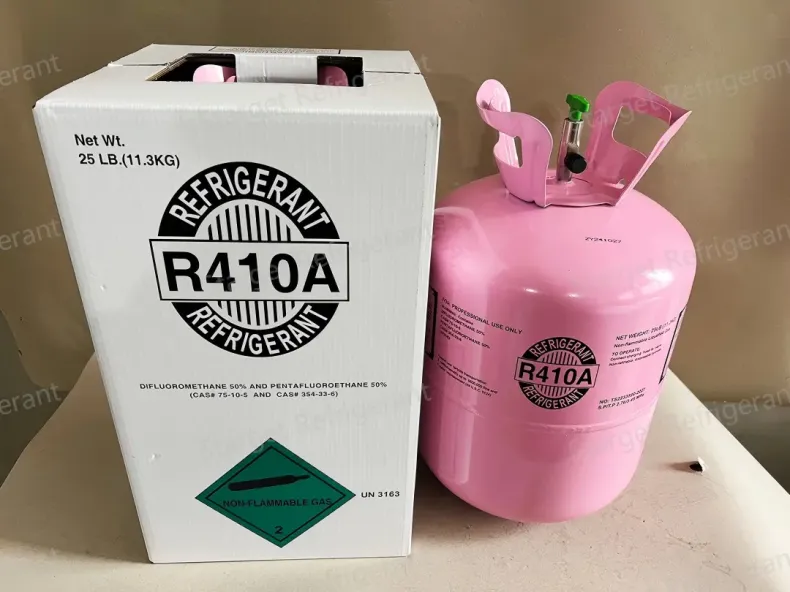
R410A Refrigerant Price 2026
If you’ve purchased R410A for the past few years, you already know that R410A Refrigerant prices aren’t stagnant. In 2026 the trend remains rising in a number of areas. Why? Limits on production, tighter HFC limits as well as a service base that is still massive.
Prices for wholesale have risen because of lower fluorochemical production as well as the added compliance cost. In the same way there is a growing trend that OEMs are switching towards lower-GWP options, however this hasn’t slowed demand for R410A but it’s not quite there yet.
What is it that buyers are actually doing?
- Large distributors lock in quarterly volumes.
Small-scale contractors typically purchase when they need to, and sometimes pay an extra fee (including shipping fee, sometimes, the fees will be very high if you import from other countries with small MOQ).
The seasonal spikes continue to occur: North America, the Middle East, and parts of Asia are prone to pre-summer surges followed by a dip in the winter months.
In the early 2026 timeframe the reported prices have stabilized to firm in the majority of hubs. Still no general softening due to the ongoing HFC timetables for phase-down.
Source Source: UNEP Kigali Amendment Summary Source: UNEP Kigali Amendment summary ozone.unep.org*
Contents
Key R410A refrigerant Price Drivers
Many factors are increasing R410A refrigerant prices up, or creating a jittery. This is what’s happening right now.
Policy phase-downs: According to the Kigali Amendment, U.S. AIM Act, and EU F-gas regulations HFC import and production limits continue to shrink. A lower availability of quotas means increased prices, especially as the demand for summer begins to rise. Costs for compliance (reporting and quota management) are passed on to the customer.
Feedstock and production costs* The fluorochemicals’ raw materials aren’t cheap and prices for energy, as well as environmental controls increase uncertainty. If upstream plants enter the process of turning around or encounter problems, R410A refrigerant prices can spike suddenly.
**Logistics and packaging Cylinders, valves and approved containers cost more than levels prior to 2020. Metal prices, safety certificates and shipping costs all have a part to play. For countries dependent on imports, landing costs fluctuate with customs regulations as well as freight costs.
Service Demand* New equipment is moving into R32, R454B, and other A2Ls. The installation base of R410A systems is massive. Service demand remains consistent and places a ceiling on pricing. Temperatures that are hot can create temporary tightness.
Enforcement and Compliance* more crackdowns on illegal imports as well as mislabeled cylinders have squeaked the market for gray. This means less cheap alternatives, which are not spec’d as well as better system security and reliability.
Policy updates: EU F-gas (environment.ec.europa.eu) & EPA Refrigerant Management (epa.gov/section608)
Regional Price Differences
R410A refrigerant prices differ across countries. Here’s an overview for 2026.
North America* Fixed pricing and contractors pay an additional fee in the spring and early summer. A quarterly commitment will get you a lower price per pound. State-level regulations (following AIM Act) affect availability as well.
“European Union” R410A refrigerant prices remain high in comparison to the past due to the phase-down of F-gas. Authorized distributors provide traceability and certified cylinders, unlicensed sellers are available, but they are at the risk. Anti-smuggling measures have stopped the imports of cheap and non-compliant products.
Middle East – Demand for cooling in the summer results in short-term price increases. Import dependence is high, which implies that logistics planning is crucial particularly for large and district cooling projects.
Asia-Pacific Manufacturing hubs near production get better prices. Markets with strict import restrictions and limited supply locally experience increased R410A refrigerant prices. R32 acceptance in brand new equipment has decreased R410A, the growth in R410A demand, however, service is keeping it running.
Latin America and Africa – Landed costs dominate. The fragmented distribution system means that buyers typically deal with regional wholesalers and larger contractors have diverse portfolios of brands to hedge.
The bottom line is that currency movements as well as local taxes and channel structure create noise in the transaction price. Benchmark quarterly and contact several distributors.
Procurement Strategies to Manage Costs
The fluctuation in R410A refrigerant prices suggest you should have an option. Here’s the things experienced buyers are doing in 2026.
Forecast and time your purchases: Map purchases to maintenance cycles and local weather. Make sure you lock in prices before the peak of summer.
Use framework agreements: The volume commitments that are quarterly typically include discount tiered. Plus, faster payments or aggregated purchases can cut off cents per pounds.
Control the handling of your cylinders: Manage returnable cylinders with care to prevent leaks as well as rush refill costs. A review of your cylinders’ assets could find surprising inefficiencies.
Buy only from trusted suppliers: A written record of composition quality, purity, and the marking. A refrigerant that is not in the specifications or manufactured to be counterfeit can cause the death of a compressor, and invalidate warranties.
Diversify suppliers: Partner with at two distributors who are authorized. If you have a primary distributor an account, another can manage spot orders.
Training for leak reduction: Even small reductions in leakage can add up quickly. A properly trained technician and leak prevention standards reduce the cost of refrigerant you use annually.
Think about alternatives for new installations: R32, R454B and different A2L blends are increasingly used on new machines. Switching to a different blend reduces the the likelihood of R410A dependency – but be sure to be sure to follow safety training and conformity guidelines.
Industry-specific guidance: AHRI (ahrinet.org) & the refrigerant resources of ASHRAE (ashrae.org).
Buying R410A Safely & Compliantly
Quality and compliance aren’t just an option now – they’re how to safeguard your business.
Documentation and traceability: Keep track of purchase records along with batch certificates, as well as chain-of-custody information. You’ll need these to be able to audit regulators or customers.
Cylinder Rules: Cylinders must be able to meet pressure ratings as well as the labeling requirements. Tamper-evident seals and appropriate valve types can in preventing contamination.
Technician Certification in the U.S., Section 608 certificates are required. In the case of A2L alternatives, further safety training is strongly recommended.
Recovery & recycling – Don’t vent. Recovered refrigerant can reduce the need to purchase new items and shows a high level of diligence. Incorporate this into every job of service.
Useful links: EPA Section 608 (epa.gov/section608) & EU F-gas compliance pages (environment.ec.europa.eu)
Outlook & R410A refrigerant Price Implications
More refrigerants with lower-GWPs are coming onto markets, though R410A will not disappear overnight.
Short-term (1-3 year): New installations keep changing and the base of services remains large. Quota cuts will help keep the R410A refrigerant prices under control which will likely be higher than historical lows. Don’t be expecting an immediate price crash.
Longer term: The number of installations will slowly shrink. However compliance costs, as well as the requirement for top-quality products will likely push R410A refrigerant prices above those low-cost days in the decade of 2010.
If you are a buyer planning a capital project consider refrigerant choices as well as technician training and the management of your fleet now. Service contracts are able to be used to cover the entire range of R410A or its equivalents allowing you the ability to predict costs.
Conclusion
The R410A refrigerants prices for 2026 will be influenced by policies phases downs, supply restrictions and a steady demand for services. Buyers who are smart manage volatility through the use of forward-looking planning, disciplined contracting high-quality assurance and diverse sources.
Safety and compliance are not a matter of debate as the market shifts to lower-GWP alternatives. Couple accurate forecasting with trusted suppliers and you will be able to reduce costs without sacrificing performance or the security of your regulatory system.
Related Products


Recent Posts


Product Type
Contact Us
WhatsApp:
Email:
Phone:
FAQ
Online payment, T/T, L/C, DP, Western Union, Credit Cards, or please contact us for further confirmation
Disposable Cylinder: 15lbs, 30lbs, 50lbs;
CE Cylinder: 12L, 13.6L, 50L;
DOT: 30lbs, 50lbs;
Besides, we can provide 50L, 60L, 100L, 400L, 500L, 800L, 926, 1000L cylinders, and low & high pressure tank.
Please click here for more details about our refrigerant packaging.
1. Due to shipping fee, our MOQ usually are 1150 cylinders (13.6kg), especially for destinations farther away, like South America or Africa;
2. For destinations that are relatively close or customers who are willing to bear the freight, 300-500 cylinders are OK, but please contact us for specific confirmation;
3. For some special refrigerants, like R508B and R23, the minimum order quantity can be less, please contact us for specific confirmation;
4. Please note that due to transportation or freight issues, we generally do not do retail. For one or two cylinders, please buy directly from local distributors. Thank you for your understanding.
Refrigerant prices are affected by international shipping costs, order quantity, or refrigerant industry fluctuations.
Please contact us with your destination port, refrigerant packaging and order quantity, our colleague will contact you soon for the relevant things about the price.
Yes, the import license is necessary. Besides, for EU customers, they also need HFC quota. If you are not sure of this, please contact us for more details.
Our factory is located in Quzhou City, Zhejiang Province, China. Welcome to visit our factory.
According to relevant Indian policies, refrigerant packaging must be ISO Tank.